

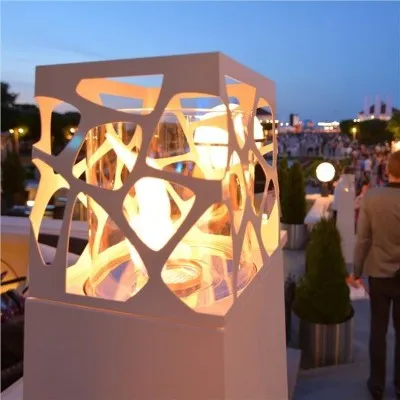
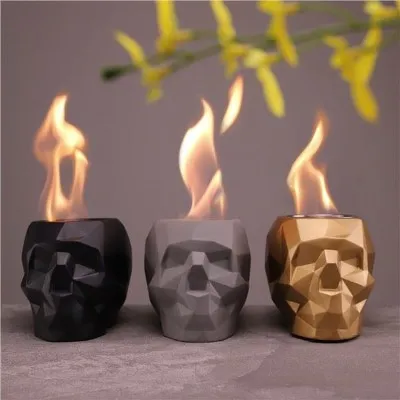
We often receive a question about the emissions of alcohol fireplaces. Almost all real fire-type devices will produce emissions of different substances when burning, and alcohol fireplaces are no exception. In this article, I will introduce you to the relevant knowledge of various emissions, in order to answer your many questions about alcohol fireplaces in this regard.
The three elements that form combustion
The three elements that form combustion are a very simple way to understand any combustion process. The basic conditions required for flame combustion are: combustibles, combustion aids, and ignition sources. Without these three, there will be no flame.
Emissions of alcohol fireplaces
After turning on the alcohol fireplace, the inevitable combustion products are the following three points, namely heat, water and carbon dioxide; the first two points do not pose any threat to humans, domestic pets, or captive animals. At this point, some friends may worry about whether the water produced will short-circuit the circuit connecting the alcohol fireplace. There is no need to worry so much because the amount of water discharged is very small. In fact, if I didn't mention that water is also an inevitable combustion product of the alcohol fireplace, then when you really experience the alcohol fireplace, you may never think of this aspect.
Carbon Dioxide from Alcohol Fireplaces
The only real potentially problematic emissions from an alcohol fireplace are those related to carbon dioxide. Not surprisingly to many people, carbon dioxide can be dangerous and even deadly.
Since an alcohol fireplace is ventless, carbon dioxide is emitted into the room and the people inside it. However, if a fireplace were deadly, it would never be sold, and it is. In fact, carbon dioxide emissions from an alcohol fireplace are so low that they are not a threat.
So is carbon dioxide from an alcohol fireplace dangerous? The answer is no. Also, most homes have ventilation systems, doors and windows, which also allow fresh air to circulate throughout the rooms, further reducing the threat of the already meager carbon dioxide emissions.
Are there any dangerous particulates produced?
You may have heard that traditional open wood-burning fireplaces produce dangerous particulate emissions. Studies have linked this type of emission to cancer. With an alcohol fireplace, the absence of particulate emissions is even safer for your health. There is no smoke or fumes during the combustion process of an alcohol fireplace. This is a very clear sign that it is a pure flame produced by biomass alcohol. Therefore, as a user, there is no need to worry about inhaling dangerous particulates.