
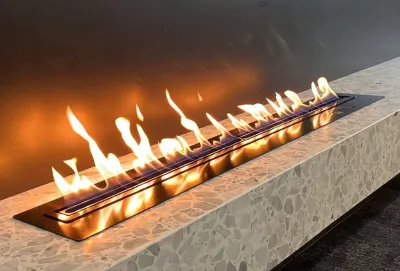
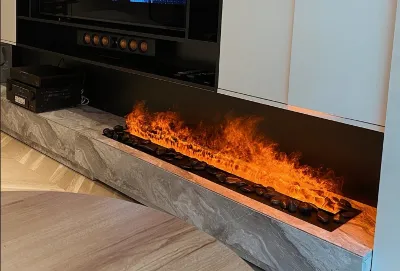

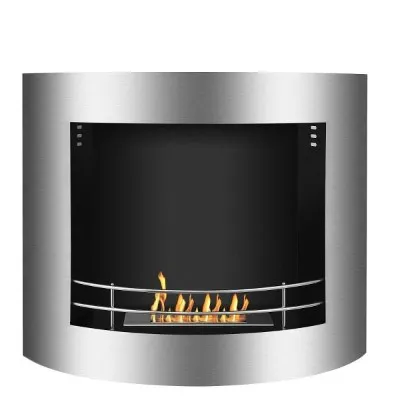
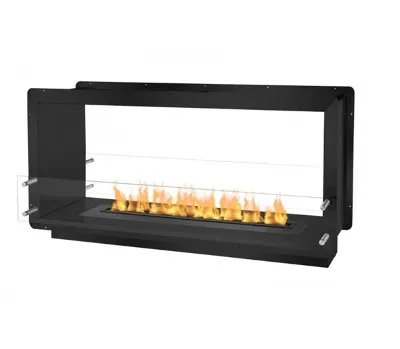
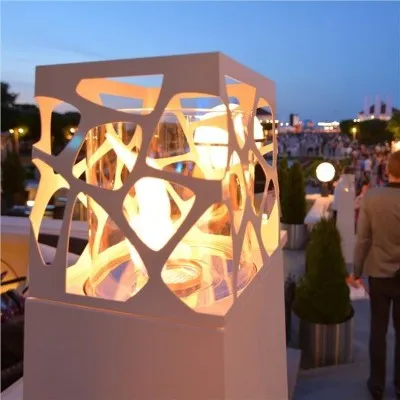
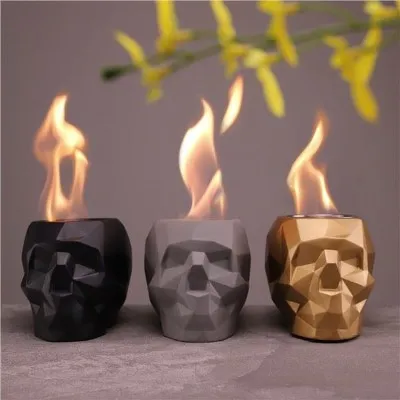

A fireplace is not a wall-mounted boiler. It's a traditional, ancient heating device that can be installed either freestanding or built into a wall, suitable for both indoor and outdoor use. It uses a variety of currently known combustible materials, such as wood, alcohol, and natural gas, and typically vents exhaust gases through a chimney. While it's generally considered an imported invention, fireplaces have been documented in my country since the Xia, Shang, and Zhou dynasties. Due to their consistent use of various renewable energy sources and the advancement of human technology, they appear to be experiencing a resurgence in popularity in China.
Currently, fireplaces are available in a wide variety of styles and designs. Initially, they were categorized by style and design, but now they're more accurately distinguished by the fuel they power. Today, I'll focus on ethanol fireplaces, which are becoming increasingly popular due to their environmental appeal, and explain how to choose the right ethanol fireplace for you.
How to Choose the Right Ethanol Fireplace?
1. Consider Your Own Circumstances
Currently, fireplaces readily available in the domestic market fall into two main categories and serve three different purposes: real-fire fireplaces, artificial-fire fireplaces, and decorative fireplaces without heating capabilities. Among these three types of fireplaces, real fire fireplaces can be further categorized as wood-burning fireplaces, gas fireplaces, pellet-fired fireplaces, and ethanol fireplaces. Ethanol fireplaces are suitable for a wide range of home types and are relatively affordable. While their heating capabilities don't match those of the other three, they outperform electric and decorative fireplaces, making them a universal solution.
2. Comparing Smart and Manual Ethanol Fireplaces
The two are worlds apart. As the name suggests, smart ethanol fireplaces are high-tech products that utilize modern microcomputer chips for fully intelligent control. Most often, they feature a solid sheet metal construction to create a high-tech aesthetic. These products emphasize safety and smooth operation, focusing on user-friendly features while ensuring optimal combustion. Why? It's no exaggeration to say that every combustion cycle in a smart ethanol fireplace is calculated by a computer, ensuring the perfect ratio between fuel supply and flame size. However, precisely because of this sensitivity and mechanical rigidity, if environmental data changes, the computer will replace the human brain in making decisions, shutting down the power, fuel supply, and system shutdown to ensure user safety.
3. Suitable Environments for Ethanol Fireplace Installations
The installation environment can dictate the product's functionality and specifications. Common installation locations for ethanol fireplaces are living rooms, entertainment rooms, and studies, where people may frequently pass through and gather but not stay for long periods of time. Because ethanol fireplaces lack chimneys, they consume indoor oxygen and release a small amount of carbon dioxide and water vapor during combustion. While these are harmless, prolonged use in unventilated areas is not recommended.
4. Choose an ethanol fireplace based on its installation type.
Common options include built-in and freestanding ethanol fireplaces, while less common options include custom-shaped ethanol fireplaces. Freestanding ethanol fireplaces are less constrained by space and can be installed in almost any suitable location within a space. Built-in ethanol fireplaces require ample opening space from the outset and require a fireplace mantel for aesthetic appeal. Their advantage lies in their ability to better complement the style of the space. Generally speaking, most users choose built-in or freestanding ethanol fireplaces; unusually shaped ethanol fireplaces are relatively rare.