
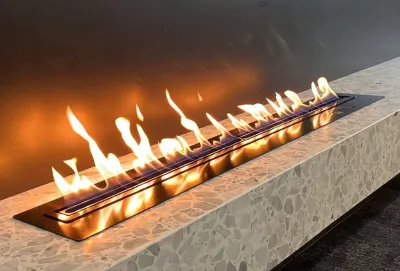
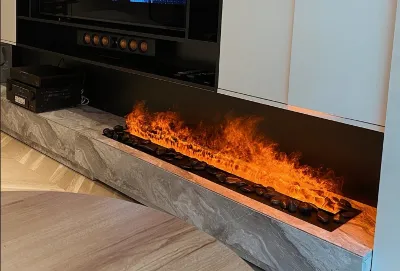

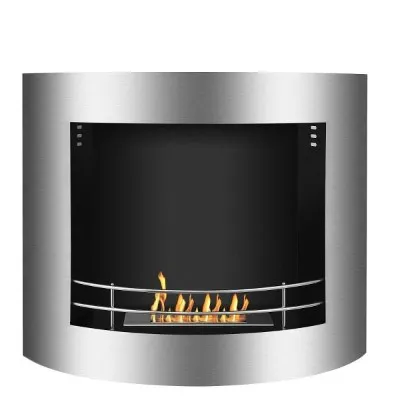
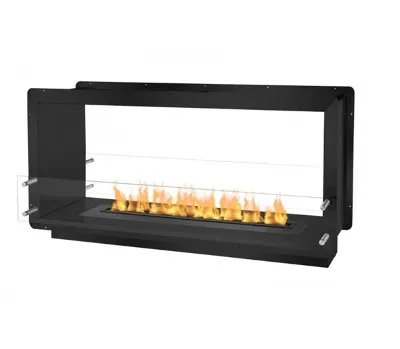

What sparks fly when water ions meet flames? Let's explore the significant differences between water ion mist fireplaces and traditional fireplaces in several areas. From their operating principles to fuel options, safety, and environmental performance, this comparison will help you gain a deeper understanding of the pros and cons of each type of fireplace.
How It Works
Traditional Fireplaces:
Traditional fireplaces primarily rely on fuels such as wood, coal, or natural gas to produce realistic flames and the desired heat.
Water Ion Mist Fireplaces:
Using ultrasonic atomization technology, water molecules are finely atomized into tiny water ions and negative oxygen ions. These ions then work together through the irregular flow of a fan to create a realistic flame effect without directly generating heat.
Combustion Method
In traditional fireplaces, the combustion process relies on fuels such as wood, coal, or natural gas, which require regular replenishment and generate smoke and dust that require regular cleaning.
In contrast, water ion mist fireplaces operate in a completely different way. It uses ultrasonic atomization technology to finely atomize water molecules into tiny water ions and negative oxygen ions, creating a realistic flame effect. This process uses the water molecules themselves as fuel, eliminating the need for additional fuel and producing no smoke or dust, making maintenance much simpler.
Safety Considerations
Traditional fireplaces release flames and heat during combustion, which undoubtedly increases safety risks such as fire, smoke asphyxiation, and carbon monoxide poisoning. Regular cleaning and maintenance are crucial to ensure stable operation.
Water ion atomization fireplaces, on the other hand, are a stark contrast. They utilize ultrasonic atomization technology to generate only water ions and negative oxygen ions, creating a realistic flame effect without the release of actual flames or heat. Therefore, they are significantly safer and require less frequent cleaning and maintenance.
Environmental Comparison
Traditional fireplaces release harmful gases such as smoke and carbon dioxide during combustion, which not only pollutes the environment but also consumes large amounts of wood or fossil fuels. In contrast, water ion atomization fireplaces use water as fuel, eliminating smoke and harmful gases, making them an efficient and environmentally friendly heating option.
Water ion mist fireplaces stand out for their exceptional safety and environmental friendliness, making them particularly suitable for decoration and creating a vibrant atmosphere. While they don't directly generate heat, the negative oxygen ions they release during operation, which, when blown by a fan, effectively purify the air. In comparison, traditional fireplaces offer superior heating performance, but require extra caution regarding fire and safety hazards.